Who has priority at a junction in Spain? Signs first, then the vehicle on your right
Reviewed on 11 October 2026 · sources: BOE (Reglamento General de Circulación, Ley de Tráfico)
Short answer. At a junction in Spain, the signs and signals decide who goes first. Only when nothing regulates the junction does the general rule apply: you give way to vehicles coming from your right. That is what articles 56 and 57 of the Reglamento General de Circulación say, developing article 23 of the Ley de Tráfico.
If you drive in a country where unmarked junctions are handled by "whoever arrives first" or by the left-hand rule, this is the habit to change: in Spain, unmarked means right-hand priority.
Junctions with signs
When there are signs, the right-hand rule stops mattering. What counts is the sign you face and the sign the other driver faces:
| Sign | What it requires | Article |
|---|---|---|
| Give way (R-1) | Give way to vehicles on the priority road, whichever side they come from. Stop completely only when necessary | 56.5 |
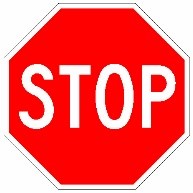
| Stop (R-2) | Always stop completely, and give way | 56.5 |
| Priority road (R-3) or junction with priority (P-1) | You have priority over vehicles on the other road | 56.4 |
The practical difference between give way and stop is one thing only: with give way you stop if somebody is coming, and with stop you always stop. In both cases the priority belongs to the vehicle on the priority road, regardless of whether it comes from your right or your left. A traffic light or a police officer directing traffic ranks above the road signs (art. 133.1; arts. 56.2 and 56.3 tell you to obey them).
Junctions without signs
With nothing to regulate the junction, you give way to vehicles approaching from your right, with four exceptions in article 57.1:
- Vehicles on a paved road have priority over those coming from an unpaved one.
- Rail vehicles, such as trams, have priority over other users.
- Vehicles already inside a roundabout have priority over those entering it (see roundabout priority).
- Vehicles on a motorway or dual carriageway have priority over those joining it.
A worked example: a village crossing with no signs
You approach an unmarked crossroads on a paved village street. On your right a farm track joins, and a tractor is coming along it. A car approaches from your left. Straight ahead, another car wants to turn left across your path.
- The tractor on your right. It comes from your right, but from an unpaved road, so exception 1 gives you priority.
- The car on your left. You are on its right, so it must give way to you.
- The car turning left. The right-hand rule does not decide this one. A driver turning must make sure that the speed and distance of oncoming traffic allow the turn without danger (art. 74.1). It waits and you carry on.
Put a stop sign (R-2) on your own street and the result reverses: you would give way to all three, because stop requires you to give way to everyone on the road you are joining, from either side.
The trap. Priority has two limits that people forget. A driver with priority must not enter a junction if the traffic is such that he will probably end up stopped and blocking the cross traffic (art. 59.1): with a queue ahead, you wait before the junction. And a driver who must give way has to show it early, by slowing gradually, and must not start or continue if that forces the other driver to change course or speed suddenly (art. 58.1).
Common mix-ups
- Give way is not the same as stop. Only the stop sign always requires a complete stop.
- A sign beats the right-hand rule. If your road has give way (R-1) and the other driver arrives from your left on the priority road, you give way even though he is not on your right.
- Officers and traffic lights come first. Where they conflict with a sign, the officer or light prevails.
If you do not respect it
Ignoring a stop or give-way sign is a serious offence (200 euros, Ley de Tráfico, art. 76.l) and costs 4 points, like breaking the rules on priority in general (annex II, item 10).
Keep going
- The topic in the syllabus: junctions and right of way.
- The signs in Spanish: R-1 give way, R-2 stop and P-1a junction with priority over the road on the right.
- Related: roundabout priority and overtaking cyclists.
- Practise: today's free 30-question DGT exam, available in English.
Reviewed against the consolidated BOE text on 11 October 2026. DrivingLingo is independent and is not endorsed by the DGT. This page is not legal advice.