DGT tricky questions: how to read the situation
Sources: BOE, DGT
A DGT theory question can feel tricky when a small detail changes the rule: only, always, the type of road or an exception. Read the whole situation, identify what it asks and apply the relevant Spanish rule. The situations below are original explanatory examples for learning those distinctions.
The theory test format guide explains the paper and marking. The DGT also provides preparation resources and information. Use practice to identify the rules you need to study rather than relying on a list of phrases.
Every answer explained; traffic rules cite their BOE article · Full topics 1–3 and the sign dictionary free · English and Spanish
Words that change the scope
“Permitted” and “compulsory” ask different things. “Only” narrows a statement; “always” extends it to every situation in its scope. Neither word tells you whether an answer is right without checking the rule.
For example, the general priority rule at an unsigned junction has exceptions. The distinction between a paved road and an unpaved road can matter more than which vehicle approaches from the right. The legal basis is article 57.1.a of the General Traffic Regulations. Read the conditions around a familiar rule before deciding that it applies.
Example: approaching a roundabout
Imagine a vehicle about to enter an unsigned roundabout while another vehicle is already circulating. Applying a remembered “give way to the right” phrase without recognising the roundabout would miss the relevant exception. Vehicles already on the circular road have priority over those seeking to enter, subject to applicable signs. Source: article 57.1.c.
The useful distinction is between entering and circulating. A rule about priority on entry does not settle every question about lane changes or leaving the roundabout. Study those steps separately in roundabout priority.
Example: signalling a lane change
Imagine a driver signalling towards a lane that another vehicle already occupies. The signal communicates the intended movement. It does not remove the obligation to respect the priority of the vehicle in that lane. The warning duty comes from article 109.1; priority when changing lanes comes from article 74.2.
This is why two statements can both sound sensible while answering different questions. A driver may have to signal and also wait. Read whether the question concerns warning others, checking safety or carrying out the movement. One completed step does not automatically complete the manoeuvre.
Example: a brief stop on a motorway
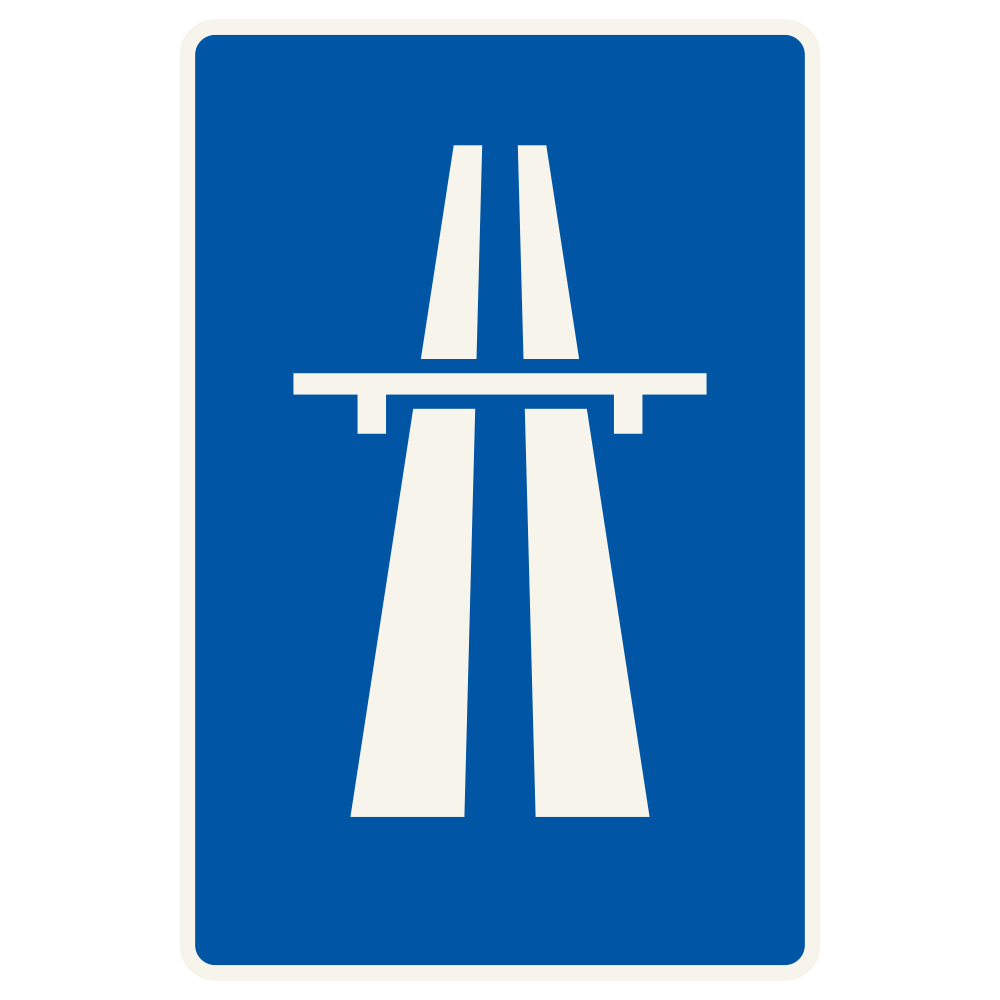
Imagine a driver wanting to stop briefly on a motorway outside an area provided for that purpose. Calling the action a stop rather than parking does not remove the motorway restriction. Article 94.1.g prohibits stopping on motorways and dual carriageways except in places provided for it.
Here the decisive detail is the road category. Avoid replacing it with a visual impression such as “a large road”. Also distinguish a planned stop from an immobilisation caused by traffic or a breakdown: changing the facts can change which provision you need to consult. Continue with stopping and parking.
Every answer explained; traffic rules cite their BOE article · Full topics 1–3 and the sign dictionary free · English and Spanish
Numbers need a context
Do not learn a quantity without its unit and conditions. A speed, a distance and a time describe different requirements even when the number happens to be the same. When revising, attach the vehicle category, road type and relevant exception to each figure.
The examination itself illustrates the principle. The limit of three mistakes in thirty questions follows from the 10% rule in annex VI.B.3 of the General Driver Regulations. It is not a universal allowance of three mistakes for every practice exercise.
Reading signs together
When two instructions appear incompatible, use the legal order of precedence rather than choosing the largest sign. For instructions of the same type, the more restrictive one prevails. Source: article 133. Supplementary panels refine the meaning of the sign under article 146.2.e.
Learn the families in road sign shapes and colours, then connect each sign to its instruction. In a picture, identify which signal applies to the movement being described.
A repeatable reading method
Identify the vehicle, road and intended action before considering the options. Read any exception to the end. After practice, explain which detail changed the rule, including when you answered correctly but were uncertain. Use the topic index and English practice for that review. If language is the main difficulty, check taking the examination in English.
Frequently asked questions
Does “always” automatically make an answer wrong?
No. Check whether the rule is absolute in that situation or contains a relevant exception.
Does an indicator give priority for a lane change?
No. Article 74.2 requires respect for the priority of the vehicle already travelling in the lane being entered.
Does priority from the right apply at every unsigned junction?
Article 57 contains exceptions, including roundabouts and the priority of a paved road over an unpaved road.
Is recognising a sign's shape enough?
Shape helps identify the family. You still need the symbol, supplementary information and other applicable instructions.
What should I record after a wording mistake?
Record the detail you missed and the rule it changed. Explain the distinction in your own words before attempting another exercise.
Ready to try it?
A free DGT-style exam every day, and Lito to explain every mistake.


Checked against the BOE in force · English and Spanish